Low aqueous solubility remains one of the most persistent obstacles in pharmaceutical development, often preventing otherwise strong drug candidates from achieving adequate systemic exposure. To overcome this limitation, modern formulation science increasingly relies on amorphous solid dispersion technologies that enhance dissolution behavior and improve oral absorption.
Spray-dried dispersions (SDDs) represent one of the most robust and scalable approaches within this category. By uniformly embedding an API in an amorphous state within a stabilizing polymer matrix, SDDs enable consistent bioavailability improvements from early development through commercial manufacturing—without compromising product stability or manufacturability.
Partner with our formulation and manufacturing specialists to determine whether spray-dried dispersions are the right strategy for your challenging API.
A significant majority of new chemical entities fall into Biopharmaceutics Classification System (BCS) Class II or IV, where poor solubility—not permeability—limits absorption. Spray-dried dispersion technology directly addresses this challenge by converting crystalline drug substances into physically stable amorphous systems with rapid dissolution profiles.
Our teams leverage spray drying to enhance dissolution performance, improve in vivo exposure, and support consistent pharmacokinetic outcomes—while maintaining control over particle characteristics, stability, and downstream processability.
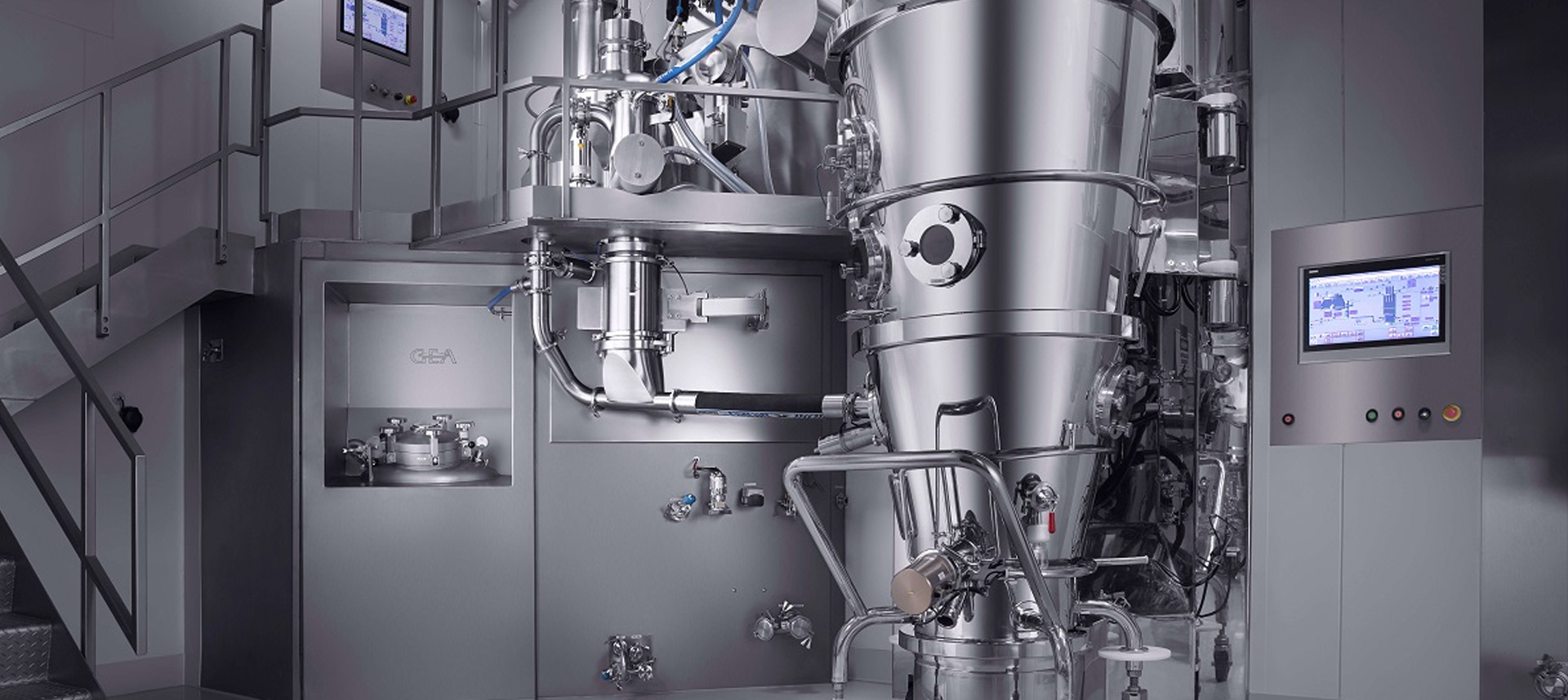
Operating under full cGMP compliance, we support programs from early feasibility and formulation screening through Phase I / first-in-human studies. Using advanced platforms such as the PROCEPT Spray Dryer/Chiller with modular 4M8-Trix architecture, we deliver highly efficient API utilization, reproducible product quality, and early scalability for commercial readiness.
Our scientists work with a broad range of pharmaceutical polymers and solvent systems selected to inhibit recrystallization, stabilize the amorphous state, and preserve enhanced solubility throughout the product lifecycle.
Spray drying offers far more than solubility enhancement. When applied early in development, it enables formulation strategies that reduce risk, accelerate timelines, and expand delivery possibilities.
Key advantages include:
Pulmonary Delivery Enablement
Aqueous spray drying supports the production of respirable powders suitable for dry powder inhalation, allowing rapid systemic uptake through pulmonary absorption.
Modified and Sustained Release Profiles
Polymer selection and formulation design can tailor drug release kinetics, extending therapeutic exposure and improving dosing convenience.
Taste Masking
Encapsulation of APIs within a polymer matrix minimizes exposure of bitter compounds to taste receptors.
API Protection and Stability
The amorphous dispersion shields the drug substance from moisture, oxygen, and thermal stress, supporting longer shelf life.
Seamless Scale-Up
Spray drying transitions efficiently from laboratory to commercial scale, supporting development continuity across phases.
High Drug Loading Capability
Optimized formulations enable higher API concentrations with reduced excipient burden—ideal for early clinical dosing and compact dosage forms.
Compared with alternative techniques such as freeze-drying, spray drying offers superior scalability, lower energy demand, and more efficient material usage—making it well-suited for both early development and long-term manufacturing strategies.
Spray drying is a continuous particle engineering process that converts liquid drug solutions into uniform dry powders in a single step, enabling precise control over solid-state properties.
The API and polymer carrier are dissolved in a carefully selected solvent system. Solvent choice is driven by drug chemistry, polymer compatibility, volatility, and safety considerations.
The solution is atomized into fine droplets using a high-precision nozzle or rotary system, dramatically increasing surface area to enable rapid solvent removal.
Droplets enter a controlled drying chamber, where exposure to heated air causes immediate solvent evaporation. Process temperatures are optimized to protect thermally sensitive compounds.
The resulting amorphous solid dispersion particles are collected via cyclone separation or filtration and prepared for further processing or dosage form development.
For particularly complex molecules, combining nanomilling with spray drying offers a powerful formulation strategy. This integrated approach enhances dissolution behavior while eliminating the need to fully dissolve poorly soluble APIs prior to spray drying.
By preserving nanocrystal dimensions within a spray-dried matrix, this method delivers:
Spray-dried nanocrystal dispersions can be reconstituted prior to dosing or directly processed into capsules, tablets, or inhalable formulations—offering unmatched versatility.
With more than three decades of formulation and manufacturing experience, our teams support pharmaceutical innovators at every stage—from early development to global commercialization.
Our FDA-inspected cGMP facility integrates formulation development, analytical characterization, and manufacturing under one roof, enabling rapid iteration and efficient technology transfer.
In-house capabilities include:
Our manufacturing suites include Grade C environments for potent compound handling, supporting a full range of dosage forms—from solid oral products and suspensions to topical systems and terminally sterilized injectables.
Through our integrated CDMO/CRO model, formulation scientists, preclinical teams, clinical operations, and regulatory experts work in parallel—streamlining IND, CTA, and NDA pathways while reducing complexity, cost, and development risk.